How to Prepare Your Furnace for a Saskatoon Winter
September is the right time to do this: before the first cold snap, before technicians fill up and before a small problem becomes a mid-January emergency.
Saskatoon's heating season does not ease in; it arrives. The city averages about 5,800 heating degree-days a year and January averages -15.4°C, so once the cold settles in your furnace runs hard until spring. The window to prepare it is September and early October, when the weather is cooperative, technicians have openings and any problems that surface can be dealt with without pressure. Here is what that preparation looks like.
Start the Furnace Before You Need It
The simplest thing you can do is turn the furnace on and let it run through a full heating cycle. Set the thermostat above room temperature and listen for anything unusual: sustained banging, grinding, high-pitched squealing, or a unit that starts and stops without finishing a cycle. Check that warm air reaches the registers within ten to fifteen minutes.
A brief burning smell on the first start after months idle is normal; it is dust burning off. A smell that lingers, or anything resembling gas, is not. If you smell gas, leave the home or area immediately, do not use switches, phones, vehicles or flames, and call SaskEnergy's 24-hour line at 1-888-700-0427 from outside. Running this test in September means anything you find can be dealt with calmly, rather than for the first time at -10°C.
Replace the Filter
Replace the filter at the start of every heating season, whenever you last changed it. A fresh filter going into October means the furnace starts the season with unrestricted airflow. SaskEnergy recommends cleaning or replacing the filter every one to two months, so check it monthly through the cold stretch rather than waiting for spring.
Check the Venting and Intake Pipes
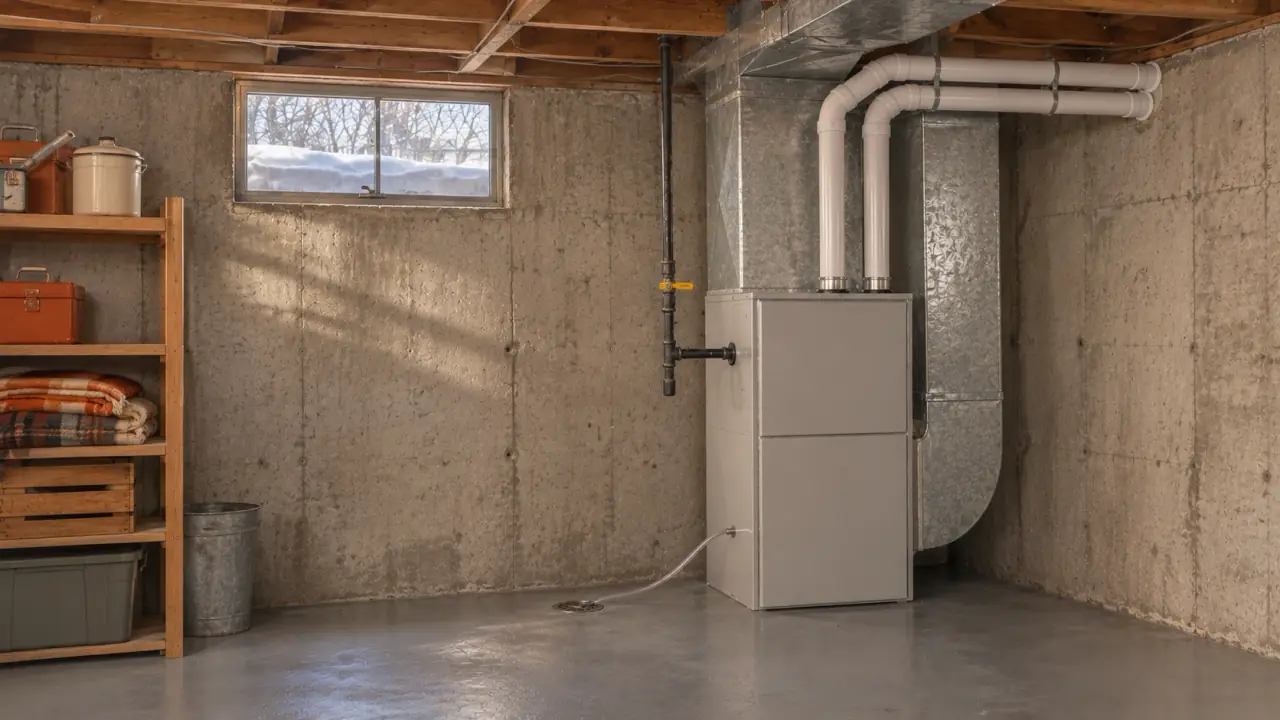
High-efficiency furnaces draw combustion air from outside through a PVC intake pipe and vent through another, usually low on an exterior wall. Before winter, locate both and confirm they are clear of nests, debris and summer damage. Make a note of where they exit the house, so when the first heavy snow arrives you know exactly where to look. SaskEnergy advises keeping the area around gas equipment and outdoor vents clear of snow, ice, leaves and other debris. A blocked intake shuts the furnace down.
Confirm the pipes are still securely fastened to the wall and the openings are undamaged. Animals sometimes investigate them over the summer. If you have had blockages before, ask a technician about a guard designed for furnace venting.
Test Your Carbon Monoxide Alarms
Every home with a gas furnace should have working carbon monoxide alarms. SaskEnergy says most alarms last 5 to 7 years, with the expiry date on the label, and recommends testing monthly and replacing the batteries annually. If your alarm is past its expiry date, replace it even if the test button still works.
Carbon monoxide has no colour or smell, and an alarm is the only warning you will get. If one sounds, leave the home, go outside and call 911 or SaskEnergy at 1-888-700-0427. Do not go back in until the level has been checked or responders say it is safe.
Book a Professional Tune-Up
Everything above is within reach of any homeowner. A professional tune-up covers what you cannot easily assess yourself: combustion, heat exchanger condition, gas pressure, burner condition and the electrical parts that control ignition and airflow. A technician doing a furnace inspection and cleaning will also flag wear likely to become a problem mid-season, such as a borderline flame sensor or a weakening capacitor.
SaskEnergy recommends an inspection by a licensed heating contractor every year. Typical Saskatoon prices run about $110 to $180 for an inspection and $120 to $200 for a tune-up with cleaning. Book in September if you can, before the first cold snaps bring a wave of no-heat calls. For what repairs cost when something does go wrong, see furnace repair costs in Saskatoon.
Know the Age of Your Furnace
Fall is also the right moment to be honest about where your furnace is in its life. A unit under ten years old that passes a tune-up with no flags is in good shape. One that is 15 years or older deserves a franker conversation with the technician about the coming season, and may be worth planning around. Our guide to how long furnaces last in Saskatchewan explains how to find the age and what to expect.
If the tune-up raises concerns, October is a reasonable time to start thinking about replacement, before demand peaks and installation timelines stretch. If something goes wrong mid-season despite your preparation, our guide to what to do when your furnace stops working walks through the first steps before the technician arrives.
A furnace that has been inspected, fitted with a fresh filter and confirmed to be venting correctly going into October is unlikely to fail at the worst moment. Saskatoon winters do not reward improvisation, but they do reward homeowners who prepare.
Directory · 3 companies
Top-rated furnace companies in Saskatoon
Independently selected on Google rating, review volume and years in Saskatoon. Every company here is rated 4.7 or higher. Tap one to open its Google listing, with phone number, hours and recent reviews.
-
View on Google
Centennial Plumbing, Heating & Electrical
Saskatoon family business since 1967. Heating, cooling, boilers, water heaters, plumbing and electrical.
-
View on Google
Razor Heating & A/C
Owner-led Saskatoon company since 2007. Furnaces, air conditioning, heat pumps, boilers and water heaters.
-
View on Google
Efficiency Heating & Cooling
Locally owned Saskatoon company since 1985. Furnaces, air conditioning, heat pumps, water heaters and tankless systems.