Saskatoon AC Seasonal Checklist: Get Your Air Conditioner Ready for Summer
Your AC sat idle through a long Saskatoon winter. Here's how to make sure it's ready before the first real heat arrives.
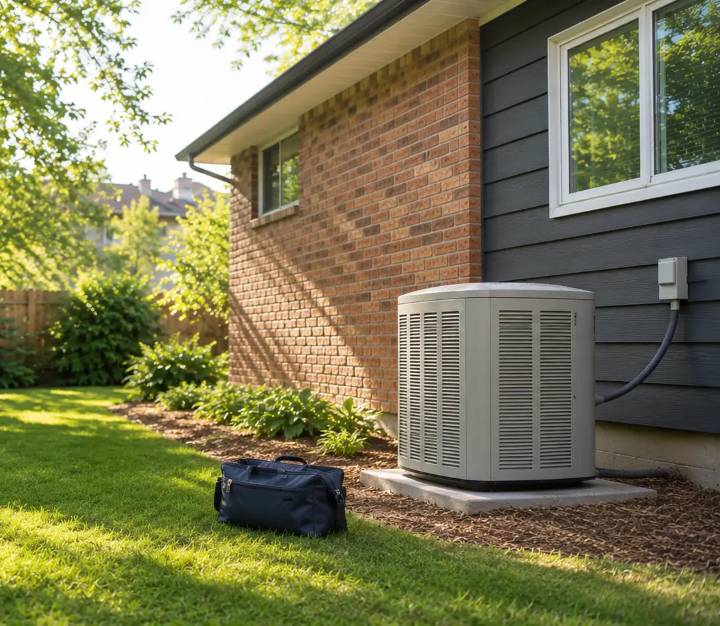
Getting an air conditioner ready for summer comes down to jobs that take under an hour: a fresh furnace filter, a cleared outdoor condenser and a check of the outdoor disconnect. With about 105 cooling degree-days a year, most central AC units here run for a handful of weeks in July and August, then sit idle for the rest of the year.
That dormancy is hard on equipment. Electrical connections loosen through repeated freeze-thaw cycles, lubricants settle or dry out, and debris from wind, seed fluff and ice builds up around the condenser. A system that ran fine when you shut it off in September may have quietly developed a problem it won't reveal until the first hot afternoon.
This checklist is organized by what you can do yourself, what warrants a professional look before summer, and what means you need a technician now.
Things You Can Do Yourself Right Now
These tasks need no special tools or knowledge. They take less than an hour and are the most effective thing a homeowner can do to prevent a breakdown.
- Replace or clean the furnace filter. Your AC and furnace share the same filter and blower. A clogged filter restricts airflow across the evaporator coil, the most common cause of a system that runs but doesn't cool. If it hasn't been changed since fall, change it before the first startup.
- Clear debris from the outdoor condenser. Remove the cover if you used one, then check for leaves, seed fluff and anything that settled over winter. The fins need airflow to shed heat. A gentle rinse with a garden hose, aimed outward through the fins, clears most debris safely.
- Check the outdoor disconnect box. The weatherproof box on the wall near the condenser may have been pulled over winter by you or a previous owner. Confirm it is seated and on before the first test run.
- Test the thermostat in cooling mode. Set it to cool, below the current indoor temperature, and wait 10 to 15 minutes. If the outdoor unit starts and cool air follows, the basic system is responding. Do the test on a day above 15 °C; running the compressor in colder weather can damage it.
- Check the condensate drain line. After a winter idle, the line can clog with algae or debris. Make sure the pan near the indoor unit is clear; a blocked line can shut the system off or overflow.
- Inspect the refrigerant line insulation. The larger of the two copper lines between the indoor and outdoor units should be wrapped in foam. If it is cracked or missing, note it for your next service; it reduces efficiency and can cause condensation.
Timing note: wait until overnight lows are consistently above 15 °C before running the compressor. In Saskatoon that usually means late May or June.
Signs Your Unit Needs a Professional Look: Not Urgent, But Don't Wait
These are early warnings. The system isn't broken, but something has changed since last season. Fixing them before the heat is inexpensive. Waiting until a hot July afternoon can turn a small capacitor replacement into an after-hours call at a premium rate, with a hot house in the meantime.
- The unit takes more than a minute to start after the thermostat calls for cooling. A short delay is normal. A noticeable lag, or a start that needs several thermostat adjustments, can point to a weak capacitor or contactor. Those are among the most common and least expensive AC repairs, typically $150–$350.
- The system takes noticeably longer to cool the house than last summer. This is often the first sign of low refrigerant. Refrigerant doesn't deplete on its own, so a slow loss means a leak that needs finding before any top-up.
- New sounds: clicking, rattling or a faint hum from the outdoor unit. Clicking at startup is normal. Clicking during a run cycle, or a persistent rattle from the cabinet, suggests loose parts, debris in the fan housing or early bearing wear. These tend to escalate.
- The system hasn't had a professional service in more than two years. For a unit that runs a few months a year, every two to three seasons is a reasonable interval. A technician checks refrigerant pressure, inspects the electrical components and cleans the coils.
- The system is more than 12 to 15 years old and hasn't been assessed recently. A long winter dormancy followed by a short, hard cooling season is rough on components, and an older unit may be near the end of its compressor life without obvious symptoms.
For any of these, a pre-season service call is the right move. A diagnostic typically runs $110–$180 and gives you a clear picture before the season starts. If you need AC repair in Saskatoon, getting on the schedule in May or early June beats the summer rush.
Act Now: These Signs Mean Call Today
Some problems can't wait. These symptoms mean the system either won't work when you need it or is at risk of getting worse the longer you run it.
- Ice on the refrigerant lines or the outdoor unit. Ice signals badly restricted airflow or critically low refrigerant. Running the system like this can damage the compressor. Shut it off, let it thaw completely and call for service.
- The outdoor unit doesn't start at all. After ruling out the disconnect and the breaker, a silent condenser is usually a failed capacitor, contactor or blown fuse. These are often quick repairs but not a homeowner job.
- An unusual smell when the system runs: burning, chemical or musty. Burning suggests an overheating electrical component. A sharp chemical smell near the refrigerant lines can indicate a leak. A strong musty odour from the registers points to mould in the ducts or air handler. None of these are DIY.
- The AC breaker trips as soon as the unit tries to start. One reset is reasonable. Two means something is drawing too much current: a failing compressor, a short or a motor on its way out. Leave the breaker off and call.
If a service provider offers to add refrigerant without discussing where the leak is, ask what the plan is for finding it. A top-up on its own is only a temporary fix.
Common Questions About AC in Saskatoon
How long should my AC sit before I turn it on in spring?
Wait until overnight temperatures are consistently above 15 °C before running the compressor. Running it in cold weather can damage internal components. In Saskatoon that usually means late May or June.
My AC worked fine last summer. Do I still need to service it this year?
It is worth a check. A Saskatoon AC sits idle for most of the year, and in that time electrical connections can loosen, moving parts lose lubrication and debris collects around the condenser. A system that ran well in August may have developed a fault over winter that only shows on the first hot day.
What does AC repair cost in Saskatoon?
Minor repairs such as a capacitor, contactor or electrical fault typically run $150–$400. A compressor replacement is typically $1,500–$3,500. A diagnostic call is usually $110–$180, and after-hours calls often cost more. See our AC repair cost guide for Saskatoon.
Do I need central air in Saskatoon?
It is a comfort decision more than a necessity. With about 105 cooling degree-days a year, hot spells are short, and many households manage with window units or a mini-split in the rooms they use most. If the house already has ducts, central air is usually the simpler install.
Is a mini-split a good option for older Saskatoon homes without ductwork?
For houses without ducts, a ductless mini-split is often the practical route. A single-zone system typically runs about $4,500–$8,000 installed. It needs no ductwork, and cold-climate models are also designed to heat. See our central air installation cost guide for how it compares with a ducted system.
When should I replace my AC instead of repairing it?
If the repair costs more than half the price of a new system and the unit is more than 12 to 15 years old, replacement is usually the better investment. A new central AC on existing ducts typically costs $4,500–$7,500 in Saskatoon. See signs your AC needs replacing.
The unit that fails on a hot afternoon is almost always the one that showed a warning sign in May. A pre-season check takes an hour and costs a fraction of a breakdown during the first heat wave.
Directory · 3 companies
Top-rated air conditioning companies in Saskatoon
Independently selected on Google rating, review volume and years in Saskatoon. Every company here is rated 4.7 or higher. Tap one to open its Google listing, with phone number, hours and recent reviews.
-
View on Google
Centennial Plumbing, Heating & Electrical
Saskatoon family business since 1967. Heating, cooling, boilers, water heaters, plumbing and electrical.
-
View on Google
Razor Heating & A/C
Owner-led Saskatoon company since 2007. Furnaces, air conditioning, heat pumps, boilers and water heaters.
-
View on Google
Efficiency Heating & Cooling
Locally owned Saskatoon company since 1985. Furnaces, air conditioning, heat pumps, water heaters and tankless systems.