Is It Time to Replace Your Saskatoon Air Conditioner?
Saskatoon units work far fewer hours than in hotter cities, which changes when replacement makes sense. These are the signs that matter, with local costs.
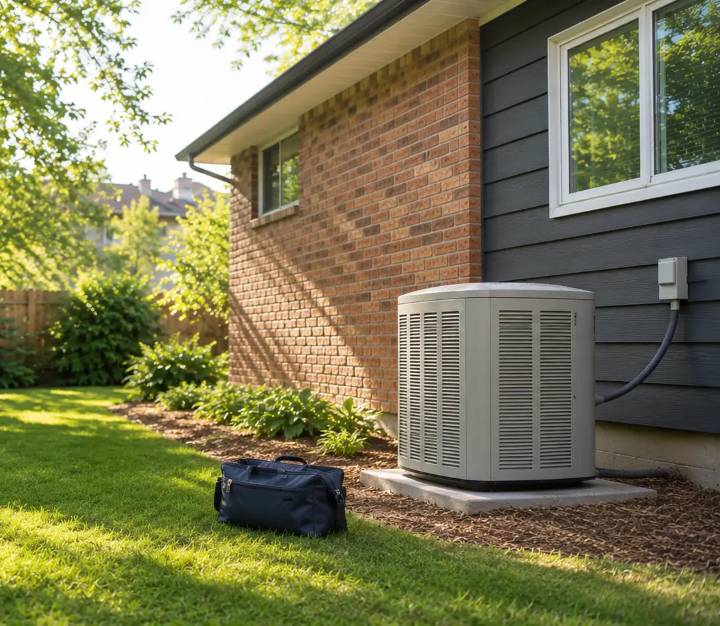
The main signs an air conditioner needs replacing are an age from the 2000s or earlier, R-22 refrigerant, a repair quote close to the price of a new system, faults that keep returning and rooms that never cool. Saskatoon does not have one: July averages 18.3 °C and the year logs about 105 cooling degree-days (Environment Canada, 1991 to 2020). Fewer running hours means slower wear, so age on its own is a weaker signal here than a pattern of failures, a refrigerant that is hard to get or a home that never cooled evenly.
Use the signs below together. One alone rarely settles it, but two or three usually do.
1. The Equipment Dates From the Early 2000s or Before
Roughly one Saskatoon home in four was built between 1981 and 2000 (15% in the 1980s, 8% in the 1990s), and in family suburbs the share is far higher. In Erindale, 91% of dwellings are from those two decades, so original or second-generation air conditioners there are now old. Briarwood and its neighbours skew to the 2000s, with 43% of Briarwood's homes built from 2001 to 2005, and those systems are entering the same stage. Find the manufacture date on the outdoor unit's data plate, or decode it from the serial number.
Because use is light, a Saskatoon condenser can outlast the usual 15 to 20 year design range if it has been kept clean. Judge it by condition and repair history, not only by the calendar.
2. It Runs on R-22
Systems installed before about 2010 are likely to use R-22. Importing R-22 into Canada has been prohibited since January 1, 2020, so what remains comes from reclaimed or older stock. A leak on one of these units puts you in a spot where each recharge is costly and the supply only shrinks. Treat an R-22 leak as a replacement trigger.
3. The Repair Quote Is Large Compared With a New System
Saskatoon prices for 2026 give you something to hold the quote against.
| Item | Typical Saskatoon cost |
|---|---|
| Capacitor or contactor | $150–$400 |
| Condenser fan motor | $350–$900 |
| Compressor replacement | $1,500–$3,500 |
| New 2 to 2.5 ton central AC (single-stage) | $4,200–$6,500 |
| New 3 ton central AC (single-stage) | $5,500–$7,500 |
| Two-stage or higher-efficiency upgrade | Roughly $1,300–$2,000 more |
A new system on existing ducts typically totals $4,500 to $7,500; see the central air installation cost guide. A cheap part on a healthy unit is fair spending. A compressor on a unit that is also old, leaking or both is the classic case to replace instead. A rough test: if the quote is near half the price of a new system, replace.
4. Repairs Keep Coming
A capacitor one summer, a contactor the next and now a fan motor adds up, and each visit also carries a $110 to $180 diagnostic. If you have paid for AC repair in two consecutive seasons, price a replacement.
5. Some Rooms Never Cool
An upstairs that stays warm or a back room that lags can mean the unit has lost capacity, or that it was never matched to the house. In older core neighbourhoods such as Caswell Hill (71% of homes pre-1960) and Mount Royal (44% pre-1960), ducts were often added to houses that were not designed for them. Replacing the condenser will not fix duct coverage. A ductless mini-split serving the trouble rooms, typically $4,500 to $8,000 for a single zone, can solve the problem better than a bigger central unit. See the neighbourhood HVAC guide for what each area tends to have.
6. The Noise Has Changed
Grinding, banging or a steady squeal from the outdoor unit means a mechanical fault, often in the fan bearings or the compressor. A short rattle on startup that clears is less worrying. A noise that lasts is worth a technician's opinion on whether the unit has life left.
7. The Bill Keeps Rising With No New Cause
If summer electricity use creeps up over several seasons with the same habits, the unit is probably working longer for less. The bill also shows who supplies you, SaskPower or Saskatoon Light & Power, which is useful if you later look at a heat pump that cools in summer and heats in shoulder seasons. See heat pumps in Saskatoon.
Do You Need Central Air at All?
With so few hot days, some Saskatoon households replace a failed central unit with a mini-split or a pair of window units and are comfortable. It depends on how much of the house you need cool and whether the ducts reach it. If you are weighing options, start with the central air installation page.
Directory · 3 companies
Top-rated air conditioning companies in Saskatoon
Independently selected on Google rating, review volume and years in Saskatoon. Every company here is rated 4.7 or higher. Tap one to open its Google listing, with phone number, hours and recent reviews.
-
View on Google
Centennial Plumbing, Heating & Electrical
Saskatoon family business since 1967. Heating, cooling, boilers, water heaters, plumbing and electrical.
-
View on Google
Razor Heating & A/C
Owner-led Saskatoon company since 2007. Furnaces, air conditioning, heat pumps, boilers and water heaters.
-
View on Google
Efficiency Heating & Cooling
Locally owned Saskatoon company since 1985. Furnaces, air conditioning, heat pumps, water heaters and tankless systems.
For the numbers behind the decision, see AC repair or replace in Saskatoon and how long air conditioners last in Saskatchewan.
Frequently Asked Questions
Typically 15 to 20 years. The short cooling season can stretch that for a well-maintained unit, but old R-22 equipment and major repairs shorten its practical life.
Only from recovered or older supply, since importing it into Canada has been banned since January 1, 2020. That makes a leak on an R-22 system expensive.
SaskEnergy's equipment replacement program covers furnaces, boilers and certain water heaters, not air conditioners.
If both are old, doing them in one job can save on labour and ensures the coil and furnace match. If the furnace is newer, replace the outdoor unit and coil only.
Often yes, if it cools well and has had no major repairs. Plan for replacement rather than spending big on it.